Showing posts with label transplanting. Show all posts

Saturday

Harbingers of spring

This week brings the long awaited first day of spring. 
Psychological shift of gears, yes, but the labors at the farm remain slow and steady. 
We've been saying this for weeks as the incremental work continues, 
so the marker day on the calendar is welcome. 
Somehow we know the momentum will likely change as well, 
hopefully picking up as we head into true high season at the farm.

Harbingers of spring abound though, offering us encouragement.
We were excited to see the first of our heirloom tomato seedlings in the greenhouse. 

This Heirloom tomato seedling grown
 in a mixture of coco-noir and organic compost. 
Before planting they will be transplanted into a larger container 
and slowly acclimatized to life outside the greenhouse 
in a process known as "hardening off."

"Young, pampered seedlings that were grown either indoors 
or in a greenhouse will need a period to adjust and acclimate 
to outdoor conditions, prior to planting in the garden. 
This transition period is called "hardening off."
Hardening off gradually exposes the tender plants to wind, sun and rain 
and toughens them up by thickening the cuticle on the leaves 
so that the leaves lose less water. 
This helps prevent transplant shock." 

now is an important time to nurture the delicate seedlings
so we can have gems like these!

In addition to transplanting the tomato starts, 
cabbage from the greenhouse is ready to make its move to the big time.

farm beds ready for greenhouse transplants
Other tidbits from the garden?
Do you discard the carrot top greens?
How about "carrot top pesto?"
photo by Steven Krause for
Plats du Jour: the girl & the fig's Journey through the Seasons in Wine Country
Diane Morgan, author of the new book, 
recently shared this recipe on NPR Radio's All Things Considered
"I almost always buy fresh carrots with their feathery green tops attached. 
In the past, I would invariably cut the tops off and send them to the compost bin. 
Honestly, it never occurred to me that they were edible. 
But the tops of other root vegetables are edible, 
so why wouldn't carrot tops be edible, too? 
One day I blanched the leaves, pureed them with a little olive oil 
and then used the puree as a gorgeous green accent sauce for fish, 
much in the same way I use basil oil. My next idea was to make pesto."


Makes about 2/3 cup
1 cup lightly packed carrot leaves (stems removed)
6 tablespoon extra-virgin olive oil
1 large garlic clove
1/4 teaspoon kosher or fine sea salt
3 tablespoons pine nuts, toasted (see below)
1/4 cup freshly grated Parmesan cheese, preferably Parmigiano-Reggiano
To Toast The Nuts
Toasting pine nuts, almonds, walnuts, pecans, hazelnuts, cashews and pumpkin seeds brings out their flavor. Spread the nuts or seeds in a single layer on a rimmed baking sheet, place in a preheated 350-degree oven and toast until fragrant and lightly browned, 5 to 10 minutes, depending on the nut or seed. Alternatively, nuts and seeds can be browned in a microwave. Spread in a single layer on a microwave-safe plate and microwave on high power, stopping to stir once or twice, until fragrant and lightly browned, 5 to 8 minutes. Watch them closely so they don't burn.
To Make the Pesto

In a food processor, combine the carrot leaves, oil, garlic, and salt and process until finely minced. Add the pine nuts and pulse until finely chopped. Add the Parmesan and pulse just until combined. Taste and adjust the seasoning. Use immediately or cover and refrigerate for up to 2 days.

We are always growing carrots at our farm. 
photos of carrot picking at the farm
by Jerry James Stone
Executive Chef John Toulze and Proprietor Sondra Bernstein
making sure our carrots taste just right
Many of the fig's favorite carrot recipes are featured in Sondra's newest cookbook, 

carrot soup photo by Steven Krause for
Plats du Jour: the girl & the fig's Journey Through the Seasons in Wine Country

photo of sweetbreads with spring vegetables
by Steven Krause 
Even our bartenders are inspired by the orange jewels we grow at the farm.


tequila ginger rouge:
sauza tequila, canton ginger liqueur, orange juice, lemonade, beet-carrot puree.
Are you nurturing seedlings in a window box or greenhouse?
When will you transplant to your "farm?"
Share with us what you are doing these days 
as we are heading into the official start of spring?

Wednesday

300 asparagus plants at the fig

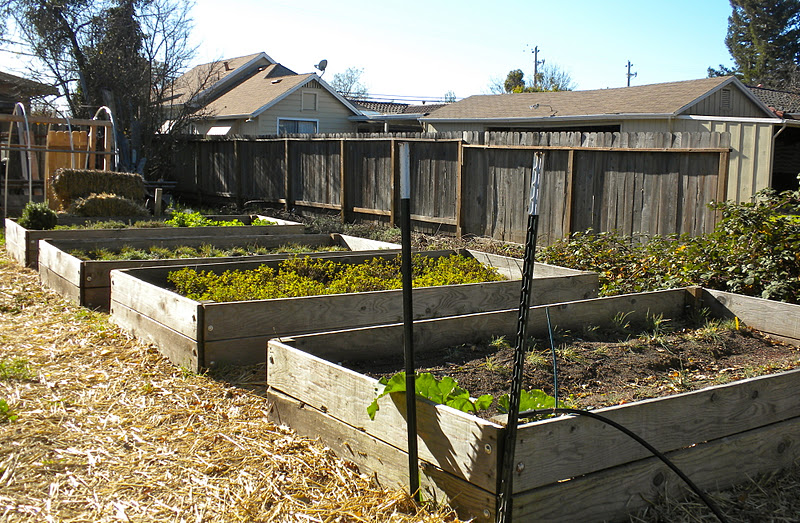
raised beds behind the fig at as winter begins-they will be lush again soon
Our farm project is aptly named the girl & the fig farm project. 
It began four years ago with some planting in the half acre 
behind restaurant. As we've expanded our farm project 
to encompass the grounds at ESATE and then the fertile 
2.5 biodynamic acres in Glen Ellen, 
we of course continue to farm behind the fig. 
parsley box behind the fig lasting into November
The chefs appreciate the convenience of the 
beds abundant with herbs right outside the kitchen door 
and we are continually learning what grows best in this area of full sun. 
We now know that raspberries do well here 
so we will be transplanting those from the farm.
ripe raspberries this summer at the farm
 And chard just loves this spot—it just goes and goes well into January. 
chard still growing in January behind the fig
John has done a lot of research and it seems this spot 
behind the fig is perfect for growing asparagus.

So now that seeds are planted in the lower the quadrants at the farm, 
we returned to the girl & the fig 
to work those beds and plant the asparagus.  

This is a perennial, so we are making a commitment 
giving the space to these plants, but what rewards we will reap. 
In early spring when other fresh vegetables are not yet available, 
having fresh asparagus will be a real treat.  

But like everything about farming, we have to be patient.
We must wait at least 2 years! 
The "Country Wisdom" as well as what John has learned 
from the experts tell us that in the first year of planting, 
it is best not to expect to harvest many spears, if any at all.  

In the second year, you can harvest for 2 weeks, 
in the third year for 4 weeks and in the 4th and subsequent years 
you can harvest for as long as 8 weeks. 
But the plants we are planting now 
will be producing for 15-18 years! 
And when they are producing, an asparagus plant 
can produce more than 100 spears per season. 
We see this as a long term project, and we are serious 
about the farm and what we grow.

In one day Ray and Matt from Local Landscapers 
working with Rafael and Jaimie planted 
300 asparagus in these beds behind the restaurant. 


The transplanted raspberries will share the area and of course, 
we will continue harvesting and growing the chard.

Did you know that asparagus spears have been known 
to grow 10 inches in one day? 
And there are records of shoots weighing 1/3 of a pound each!  
We won't likely be going for anything like that—our focus 
is on taste and bringing the freshest, most delicious 
asparagus to the table for you to enjoy.


Tuesday

January at the farm


It may be a new year but it is a continuation of our cycle at the farm.
We are in the midst of our winter garden with garlic as the first planting.
Needless to say, with our French and Italian cuisine, 
garlic is an important ingredient for all 3 of the restaurants.

Garlic was planted just a few weeks ago 
but with this unusually warm weather, the bulbs 
are already beginning to show "their feet".
The ground seems to think we are closer to Spring than the calendar does.
Part of our January labors involve working the 
raspberry and strawberry beds.
The raspberries were bountiful but some of the strawberries 
did not fare as well this summer, so we will transplant raspberries there.
But we are keeping one strawberry bed that was abundant. 
While Matt was consolidating the strawberry plants, 
he discovered frogs in the bed he was clearing.
This is actually a good sign since amphibians 
are the most fragile members of the ecosystem 
and not all that surprising in our biodynamic farm. 
We expect (and respect) the contributions 
of the "good" insects and animals that 
contribute to the health of the farm. 
The frogs are sensitive to UV light and need shelter 
in a semi-moist place but they don't harm the fruit. 
Their job is to eat the "bad guys"—insects like slugs 
that do harm the strawberries. 
And even now in January, the strawberries are looking healthy. 
Did you know that only the white blossoms produce the tasty fruit?
If you see a yellow blossom, that's a 
"false strawberry"—it may be edible but does not have much flavor.

Still a few months to go before we are back picking 
raspberries this Fall after bountiful summer crop

We are now working with the raspberries in their bare root state.
It often takes years for raspberries to be established 
enough to divide and transplant this way, so once again we are very lucky


These bare roots will soon bring us luscious berries.

This Western Blue Bird is supervising our work 
with the raspberry bare roots.
We value his contribution and know that he may be back to steal a taste
but we are willing to share.


Thanks so much for reading this blog and 
following our endeavors at the farm.
We hope to see you at the restaurants and 
have you share the fruits or our labors here.
And please do post a comment if you are enjoying these chronicles, 
have a story of your own gardening to share or ask us a question.