Showing posts with label Insectary. Show all posts

Friday

Baby (plants), it's cold outside


Recently we all held our breath on Feb. 2, Ground Hog Day 
waiting to hear our fate. It was good news from 2,608 miles away 
when Punxsutawney Phil, the "weather psychic" did not see his shadow 
which means an early spring! 
Did you know that this was the 127th Groundhog Club event?
AP Photo by Keith Srakocic of Groundhog Club Co-handler
and Punxsutawney Phil on Feb. 2, 2013 
But even as we look ahead to spring 
and enjoy the recent sunny days, it is still very cold at the farm. 
So we continue in our winter farm mode—working and overseeing 
things at both farm locations, knowing that some plants will grow better than others.
 
The garlic at Imagery farm seems to be doing well 
while the onions are struggling a bit more.
garlic beds
onion beds
Bok choy, broccoli and collards are holding their own. 
"The hardiness of plants describes their ability 
to survive adverse growing conditions. 
A plant's ability to tolerate cold, heat, drought, flooding or wind 
are typically considered measurements of hardiness.
Winter-hardy plants grow during the winter, or at least remain healthy and dormant. 
Apart from the obvious evergreens, these include many cultivated plants, 
including some cabbage and broccoli, and all kinds of carrot."
bok choy
calabresse broccoli is the most common variety
tips on how to grow it
collards
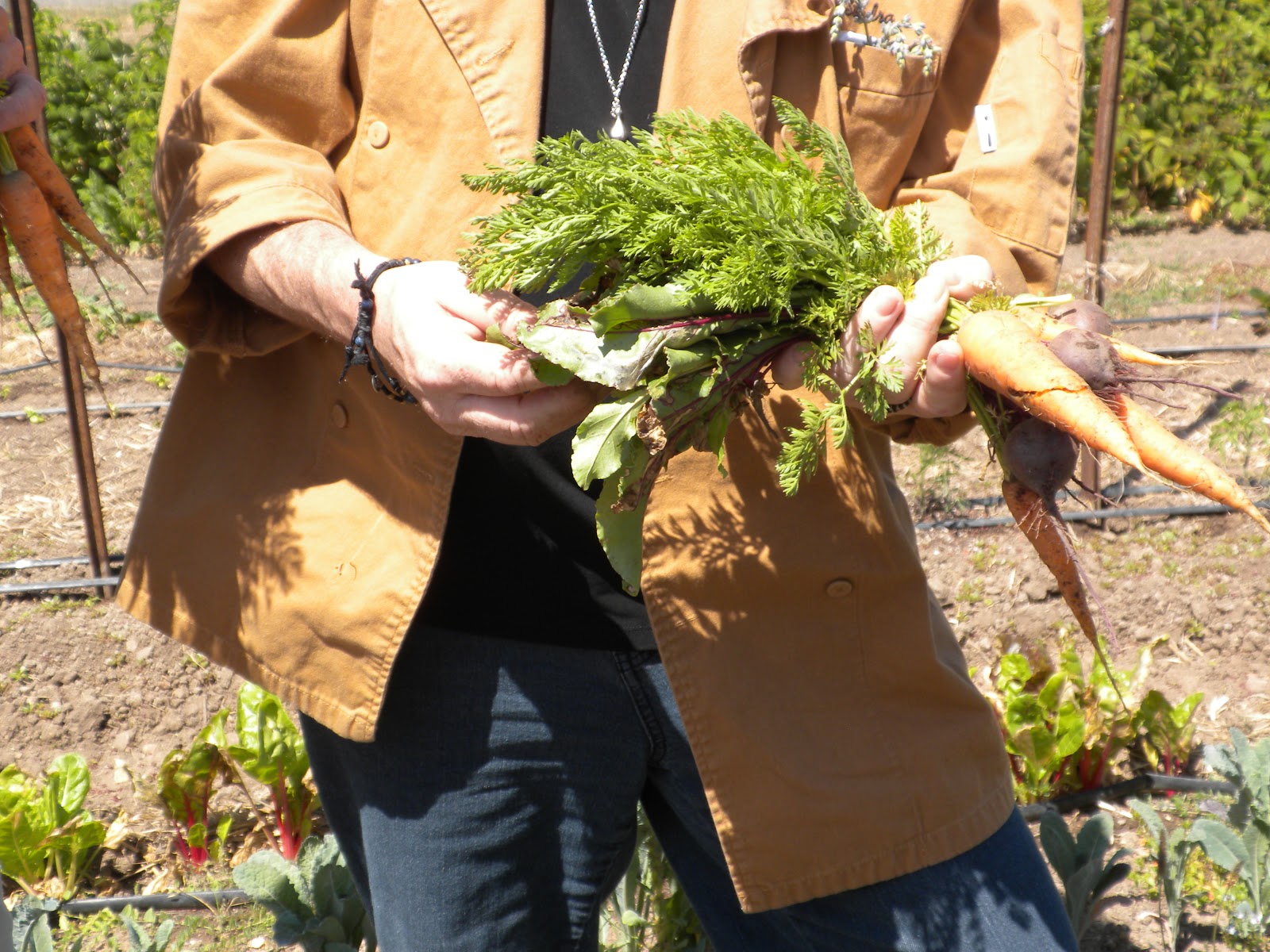
carrot photo by Jerry James Stone
All of the plants require careful attention,
so we are out at the farm often and
much of the tending needs to be done by hand.


keeps them from freezing and these plants have a lower hardiness rating 
(meaning they can survive colder weather) 
than plants who produce less of this hormone." 
One plant hormone in particular that helps 
keep them from freezing is "Abscistic Acid."

garlic must have the abscistic acid hormone
Wondering about your plants' "hardiness?" 
Here's the Hardiness Rating from USDA planting zone map.  
including building a greenhouse and the importance of mulch.
greenhouse and mulched beds
behind  "the fig"

 The cold weather does not deter us from doing our work. 
Encouraging our labors are other natural harbingers of spring at the farm
 closer to us than the 2608 miles that separate us from groundhog Phil.
we think a first year American Robin
still no sightings of our resident Owl
but it's too early in the day!
While the Insectary may not now be as lush as it soon will be, 
the hardier plants that contribute to a healthy farm 
still surround and assist us.
Insectary in the summer
Insectary in December
bit of color at Insectary in January
What's hardy in your garden these days?
How do you protect your plants during the winter?
And do you have any signs of spring yet to cheer you on as you work?

Thursday

Under cover crops?


While we plant vegetables that will inspire the chefs this winter, 
part of the seasonal plan for our farm is planting cover crops. 
"Planting a cover crop brings many benefits. It can improve the soil, prevent erosion, enhance drainage, inhibit weeds and attract beneficial insects,"
 which makes this practice a significant part of our biodynamic farming. 
"Cover cropping and crop rotations are two organic gardening practices 
that can protect and rejuvenate soils, while fostering 
balanced, biological diverse garden ecosystems."
fava beans planted behind the fig
Mustard is another good cover crop-hard to see,
but there are small green bits of mustard starting to grow
Growing Your Greens is the most watched gardening show on YouTube. 
In this episode, John Kuhler demonstrates "harvesting" mature fava bean plants, 
not to eat them (although you can do that), but to either cut them down 
or plow them under to access the rich nitrogen this cover plant 
brings to the soil. Fava beans are "nitrogen fixing" plants 
which pull nitrogen from the air and put it into the soil. 
In a few months, we will be doing something similar to this 
at the farm to reap the benefits of the fava beans we are planting now. 
This video gives you a good idea how to do this, even in a small space at home. 
You will get a close-up view of the root nodules that are "nitrogen central" for this plant. 


Our farm project encompasses the garden behind the fig 
(where our farm-to-table all started) and the farm at 
Imagery Estate Winery and we have cover crops at both locations.
fava seeds
fava beans as cover crops
Simultaneous with our work at the farm, we are keeping things 
going behind the fig: In addition to our cover crops, microgreens in the greenhouse 
and the worm bin, we are planning to create an insectary in the back area. 
two varieties of thyme in the greenhouse

new micro greens to plant
the worm bin a few weeks after creating it-
how many worms are in there?
the beginning of the insectary
Matt from Local Landscapers is starting the insectary
with wildflower seeds. He is still deciding what else to plant.
The farm at the fig also includes the raised beds right outside the greenhouse. 
In the summer, herbs overflow here making it easy for the chefs 
to dash outside the kitchen door to pick just what they need. 
Now the raised beds offer quick transport and protected spots 
for some of our fragile starts.


these onions growing in the raised beds

started out small in the greenhouse 


soon there will be onions ready for the kitchen
onions on the grill at the girl & the fig
All the work we do is a part of the cycle of 
farm to table and we keep it going all year long, 
no matter what the season.

Wednesday

farm fyi


photo by Steven Krause 
"It's a farm, so all our plans may not mean much," 
John reminds us frequently. 
We can do our research and plan and yet we know 
that it is mostly up to Mother Nature 
what the harvest at the farm will yield. 
We pay attention to what nature tells us, 
 to learn how to best contribute to creating an abundant farm. 
photo by Steven Krause
We are lucky to have rich fertile soil at the Imagery Estate Vineyard farm. 
One way to tell if it is a good soil is to grab some dirt
and ball it up – then quickly open your hand.
It should break up easily. And, the dirt should
brush off your hand without sticking too much.  
Of course, if you find those friendly earthworms in the dirt, 
then you know you've got "the good stuff." 
Loam soil like ours – a combination of sand, clay and silt 
in relatively equal amounts – is considered best for planting. 
It is ideal for most plants because it holds plenty of moisture 
but also drains well so that sufficient air can reach the roots.
We even pay attention to which way the winds blow. 
Since that is usually west to east, 
we are keeping the lemon verbena bushes 
which act as a natural wind barrier. 
So we worked around these in November and December
as we prepared the winter garden. 
The fragrant lemon verbena also inspired 
the creation of lemon verbena pot de creme.
photo by Steven Krause
The hyssop plants that were interspersed in this area here help out too. 
An extension of our biodynamic insectary concept, 
the blue blossoms and scent of the hyssop 
attracts bees, hoverflies, and butterflies. 
This herb works hard for us controlling pests 
and encouraging pollination without the use of unnatural methods.

This winter we are experimenting with companion plants,
a new way of planting for us that we hope 
will really enhance our harvest. 
It's not about getting more or bigger plants, 
but ones that taste better. We will alternate radish and mustard greens
in a row and see if the radishes grow differently
than in the rows where they are planted alone. 
The mustard greens act as a buffer for pests that can harm the radishes. 
we had radishes last well into November this year. 
What's interesting is that the mustard greens both 
repel and attract insects – keeping some away 
but attracting others that might have attacked the radishes.
It is easier to take out some of the mustard leaves 
that are sacrificed, leaving others untouched. 
photo by Steven Krause
And all this activity goes on around the radishes which are protected, 
ensuring that they make it to the table 
sweet, peppery and perfect to enjoy.
mixed seasonal radishes, anchovy butter and grey sea salt at the girl & the fig 

The farm blog will chronicle how the companion plants are doing, 
so continue to follow here to see how it grows.
Let us know what you think of the blog, ask a farming question
or tell us how your gardening is going.
And we especially want to know 
if you enjoy something at one of the restaurants
 that we've grown at the farm.