Recently we all held our breath on Feb. 2, Ground Hog Day
waiting to hear our fate. It was good news from 2,608 miles away
when Punxsutawney Phil, the "weather psychic" did not see his shadow
which means an early spring!
Did you know that this was the 127th Groundhog Club event?
 |
| AP Photo by Keith Srakocic of Groundhog Club Co-handler and Punxsutawney Phil on Feb. 2, 2013 |
But even as we look ahead to spring
So we continue in our winter farm mode—working and overseeing
things at both farm locations, knowing that some plants will grow better than others.

The garlic at Imagery farm seems to be doing well
while the onions are struggling a bit more.
 |
| garlic beds |
 |
| onion beds |
Bok choy, broccoli and collards are holding their own.
"The hardiness of plants describes their ability
to survive adverse growing conditions.
A plant's ability to tolerate cold, heat, drought, flooding or wind
are typically considered measurements of hardiness.
Winter-hardy plants grow during the winter, or at least remain healthy and dormant.
Apart from the obvious evergreens, these include many cultivated plants,
including some cabbage and broccoli, and all kinds of carrot."
 |
| bok choy |
 |
| calabresse broccoli is the most common variety tips on how to grow it |
 |
| collards |
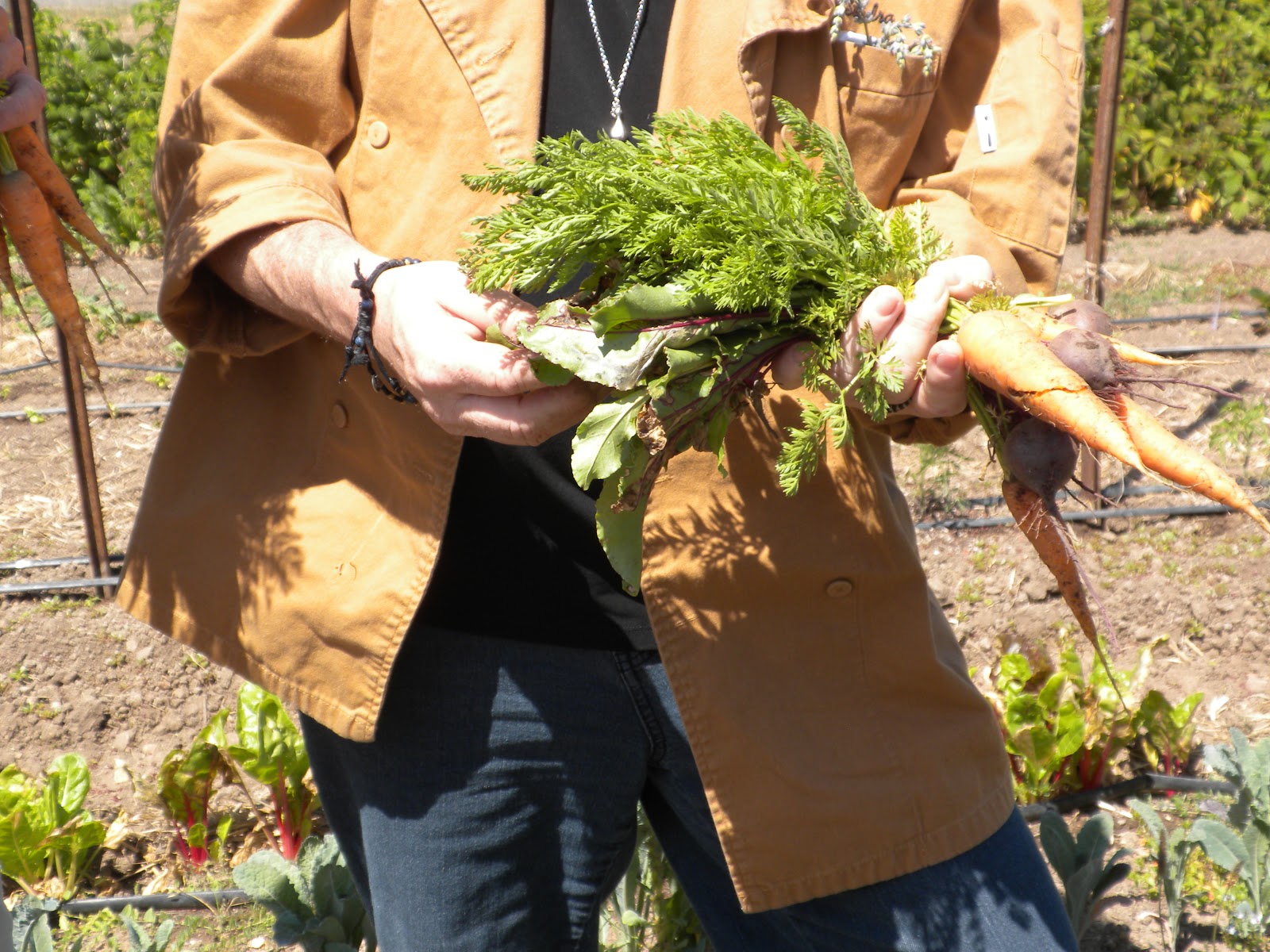 |
| carrot photo by Jerry James Stone |
All of the plants require careful attention,
so we are out at the farm often and
much of the tending needs to be done by hand.


"Some plants produce special hormones that
keeps them from freezing and these plants have a lower hardiness rating
(meaning they can survive colder weather)
than plants who produce less of this hormone."
One plant hormone in particular that helps
keep them from freezing is "Abscistic Acid."
 |
| garlic must have the abscistic acid hormone |
Wondering about your plants' "hardiness?"
Here's the Hardiness Rating from USDA planting zone map.
And here are tips on protecting plants from the cold
including building a greenhouse and the importance of mulch.
 |
| greenhouse and mulched beds behind "the fig" |

The cold weather does not deter us from doing our work.
Encouraging our labors are other natural harbingers of spring at the farm
closer to us than the 2608 miles that separate us from groundhog Phil.
 |
| we think a first year American Robin |
 |
| still no sightings of our resident Owl but it's too early in the day! |
While the Insectary may not now be as lush as it soon will be,
the hardier plants that contribute to a healthy farm
still surround and assist us.
 |
| Insectary in the summer |
 |
| Insectary in December |
 |
| bit of color at Insectary in January |
What's hardy in your garden these days?
How do you protect your plants during the winter?
And do you have any signs of spring yet to cheer you on as you work?


