Showing posts with label lemon verbena. Show all posts

Tuesday

Gold in the Garden


They call them summer squash 
and indeed that is the bounty of the summer!
Like most of you, our squash plants are blooming in abundance.
We have many varieties of this "yellow gold" growing at the farm.

In fact, we even have this one very hearty squash volunteer 
that's popped up amidst the padron peppers!


between the many varieties of squash!

crookneck squash grows at our farm
and lemon squash
 and also Goldenbar zucchini

Goldenbar zucchini are the yellow squash 
that are shaped just like the more standard green zucchini. 
Goldenbars are a little creamier and better for slicing and dicing 
than for grating to use in zucchini bread.
The Goldenbar zucchini can also be shaved with a peeler or sliced thinly for salads. 
The chefs at the girl & the fig, ESTATE and 
the fig café and winebar continue to get creative 
with the bounty from the farm.

Here are some great tips on growing and harvesting squash 
from Smart Gardner's new "Ask a Gardener" series. 

The other "yellow gold" we have at the farm is the lemon verbena.
The plants act as a wind barrier protecting other things growing in the beds 
and of course lemon verbena has a beautiful scent, 
making it a welcome addition to any garden.


But of course, what is best about the lemon verbena 
is what our chefs create with this herb!
A favorite at the girl & the fig is lemon verbena custard.

photo by Steven Krause from
Plats du Jour: the girl & the fig's Journey Through the Seasons in Wine Country

Lemon verbena is a very fragrant and versatile herb, 
often used as a scent in soaps and perfumes. 
But there are many ways to use it in the kitchen—brew it in tea
or mix it with other herbs for more layered flavors.

Do you have a favorite way to use lemon verbena?
And what are you doing with all the golden bounty
of squash your garden is giving you now?

Monday

Summer's approaching...patience at the farm

In a few days it will be the official start of summer. 
While we certainly have already been enjoying the fruits of our labors at the farm, 
we are now preparing to really reap the rewards. 
radishes and onions this spring; photo by Cece Hugo
abundant garlic beds earlier this spring; photo by Cece Hugo

We look forward to enjoying what the chefs will create
from the 350 tomatoes, 100 peppers and 100 eggplants at the farm,
as well as all the herbs and other vegetables.
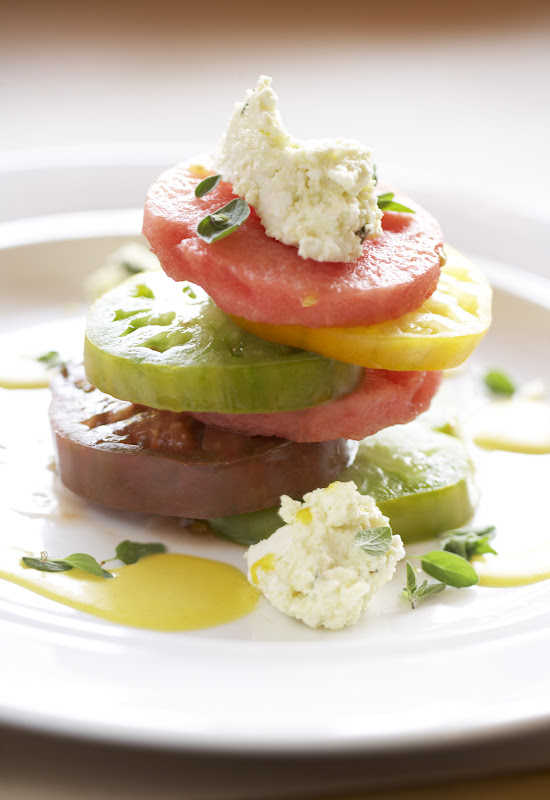
heirloom tomato & watermelon salad, a favorite at the girl & the fig
featured in our new book, Plats du Jour: the girl & the fig's Journey Through the Seasons in Wine Country
photo by Steven Krause 
photo by Steven Krause
wood roasted shiso peppers from ESTATE
Summer begins the time when a trip to the farm is not only 
about the work we need to do, 
but there is always the promise of leaving with something fresh in hand. 


We confess it is often challenging to wait for summer's bounty, 
but the knowledge of how things do change 
at the farm encourages us along.

apricot tree in the orchard in late April
the apricot tree now
A great article recently talked about how gardening teaches us patience. 
In The Telegraph, author James Alexander-Sinclair says 
"gardening is the last bastion of the patient, as nature cannot be hurried...
often the greatest pleasure is in the waiting: 
to appreciate the progress of the plant at every stage." 

We keep the image of something like our lemon verbena pots du crème
photo by Steven Krause 

as we wait for the lemon verbena to be ready. 


For now, though, as we anticipate summer, 
there are a few special things we are creating with inspiration from the farm.


What are you enjoying from your garden right now?
And what have you planted that you look forward to having this summer?


Wednesday

farm fyi


photo by Steven Krause 
"It's a farm, so all our plans may not mean much," 
John reminds us frequently. 
We can do our research and plan and yet we know 
that it is mostly up to Mother Nature 
what the harvest at the farm will yield. 
We pay attention to what nature tells us, 
 to learn how to best contribute to creating an abundant farm. 
photo by Steven Krause
We are lucky to have rich fertile soil at the Imagery Estate Vineyard farm
One way to tell if it is a good soil is to grab some dirt
and ball it up – then quickly open your hand.
It should break up easily. And, the dirt should
brush off your hand without sticking too much.  
Of course, if you find those friendly earthworms in the dirt, 
then you know you've got "the good stuff." 
Loam soil like ours – a combination of sand, clay and silt 
in relatively equal amounts – is considered best for planting. 
It is ideal for most plants because it holds plenty of moisture 
but also drains well so that sufficient air can reach the roots.
We even pay attention to which way the winds blow. 
Since that is usually west to east, 
we are keeping the lemon verbena bushes 
which act as a natural wind barrier. 
So we worked around these in November and December
as we prepared the winter garden. 
The fragrant lemon verbena also inspired 
the creation of lemon verbena pot de creme.
photo by Steven Krause
The hyssop plants that were interspersed in this area here help out too. 
An extension of our biodynamic insectary concept, 
the blue blossoms and scent of the hyssop 
attracts bees, hoverflies, and butterflies
This herb works hard for us controlling pests 
and encouraging pollination without the use of unnatural methods.

This winter we are experimenting with companion plants,
a new way of planting for us that we hope 
will really enhance our harvest
It's not about getting more or bigger plants, 
but ones that taste better. We will alternate radish and mustard greens
in a row and see if the radishes grow differently
than in the rows where they are planted alone. 
The mustard greens act as a buffer for pests that can harm the radishes. 
we had radishes last well into November this year. 
What's interesting is that the mustard greens both 
repel and attract insects – keeping some away 
but attracting others that might have attacked the radishes.
It is easier to take out some of the mustard leaves 
that are sacrificed, leaving others untouched. 
photo by Steven Krause
And all this activity goes on around the radishes which are protected
ensuring that they make it to the table 
sweet, peppery and perfect to enjoy.
mixed seasonal radishes, anchovy butter and grey sea salt at the girl & the fig 

The farm blog will chronicle how the companion plants are doing, 
so continue to follow here to see how it grows.
Let us know what you think of the blog, ask a farming question
or tell us how your gardening is going.
And we especially want to know 
if you enjoy something at one of the restaurants
 that we've grown at the farm.