Showing posts with label beets. Show all posts

Friday

The Garden's Plan


definition of "grow" (from the dictionary)

[groh]  verb, grew, grown, grow·ing.
verb (used without object)
1. to increase by natural development, as any living organism or part by assimilation of nutriment; increase in size or substance.
2. to form and increase in size by a process of inorganic accretion, as by crystallization.
3. to arise or issue as a natural development from an original happening, circumstance, or source: Our friendship grew from common interests.
4.to increase gradually in size, amount, etc.; become greater or larger; expand: His influence has grown.
5.to become gradually attached or united by or as if by growth: The branches of the trees grew together, forming a natural arch.

The farm is all about growing—obviously the vegetables we plant, 
but also about our own growth. Others have written about how
 "gardening can be considered a metaphor for life." 
And the more time and effort we spend farming, the more we understand this. 
Executive Chef John Toulze has talked before about how "farming teaches us how to cook," as we pay attention to the seasons of the farm which may or may not 
fit the season as we expect. The ongoing work at the farm teaches us patience in broader ways as well—applied as we work the land, plant the seeds 
and tend our plants as they grow according to their own plan. 

John planting seeds for cover crops
some growing better than others
Then like most important lessons in life, the patience we bring 
to this project somehow becomes a greater part of our lives. 
"The thing about gardening is that you realize you can’t rush things. 
A seed takes a certain amount of time to sprout, no matter what you do."
the collard plants seem to be thriving

broccoli starting to grow

"A plant or tree takes a certain amount of time to grow, flower, 
or bear fruit, no matter what you do—some things grow as we intend, others do not." 
This may seem like a simple concept, but it is often challenging 
to apply to other areas of our lives. 
Which is why gardening is a good reminder to us in how to live. 
Because the garden has its own planand the plants, with perhaps 
a bit of help from us, and a lot of nurturing from nature will grow as they will.
Some plants are flourishing at the farm and some are not doing as well.
the lower beds when they were just planted
most of the plants are beginning thriving
but we are not sure about the beets yet
This is especially true at this time of year. 
We worked hard to get the winter crops planted before the rains 
especially the cover crops necessary to nourish the soil 
throughout the winter in preparation for spring planting. 
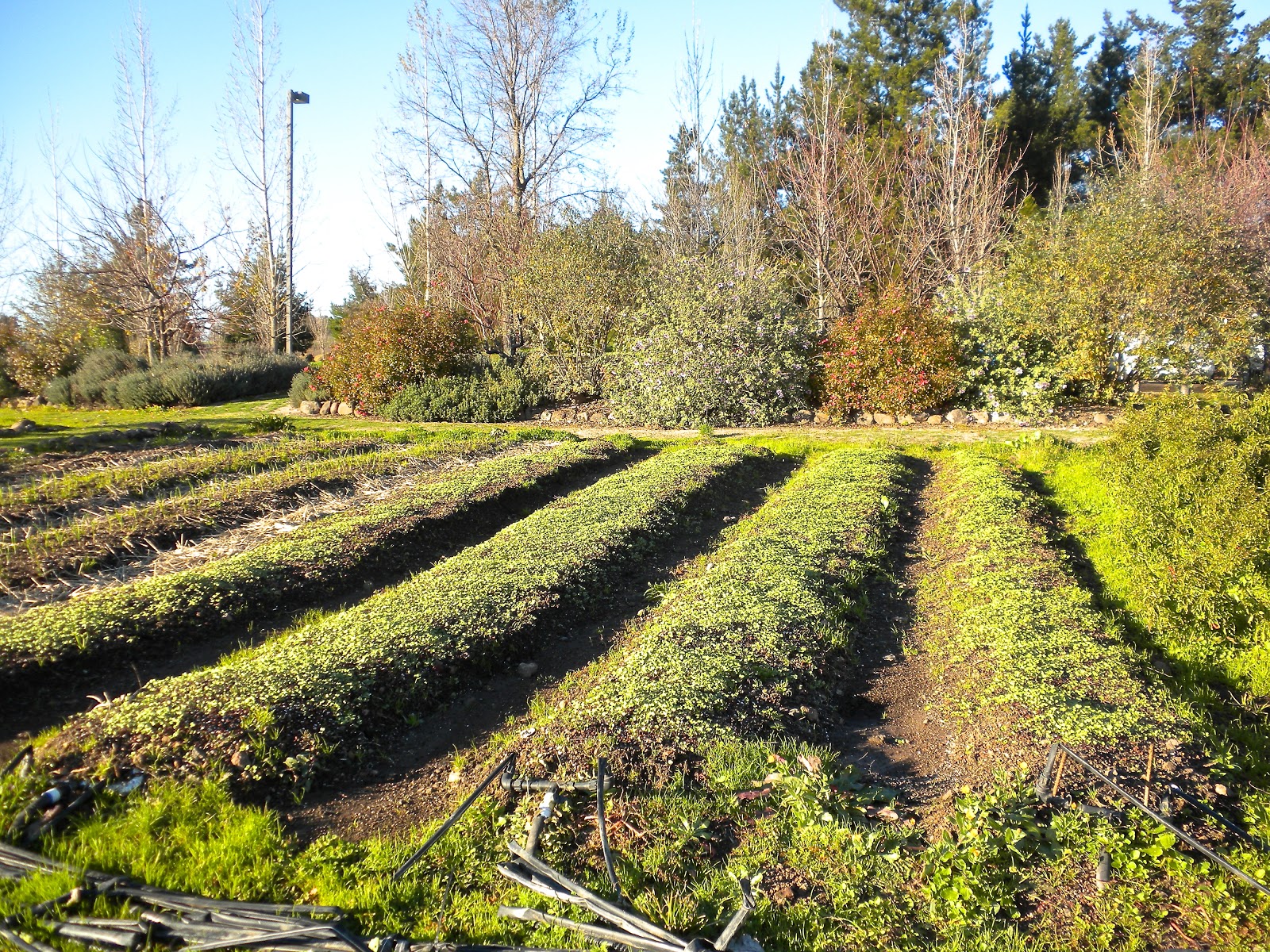
the clover beds will do well this winter
and most of the vegetables in the lower beds
should soon be on the menu at the girl & the fig
radishes are always growing at the farm
photo by Steven Krause
 
to keep up with demand for our heirloom radish starter,
perennial favorite on the menu at "the fig."
Chinese snow peas 
and our lush kale always thrives at the farm

on the menu now at the girl & the fig:
braised short rib, yukon gold potato croquettes, braised kale, natural jus

Do you find gardening meditative? 
Does your time in the garden help you clear your head or find creative solutions? 
Or, does it just help you relax as you muse on what to cook with what you grow?


Tuesday

More than one season at the farm


At the farm, we experience more than one season at a time. 
We are certainly well past spring and into summer now
as the plantings we put in the ground 
at our May "planting party" are now taking off. 
The chefs are having fun with all the padron peppers, which are in full swing. 

first plant in the ground (a padron) 
padron plant now 
Padron peppers are one of many chile peppers. 
Check out an interesting article in the current issue of Whole Living Magazine 
(including a "Pain O Meter" to help measure chile's heat) that details a lot about 
what a key ingredient chiles are for so many cultures: 
"Consumed in larger quantities by more people around the globe than any other spice, 
it's the underpinning of virtually every cuisine. 
Where would salsa, kimchi, and curry be without it? 
But because of the chile's signature bite, it's all too easy to forget 
its other qualities -- above all, flavor. 
Each chile contains a unique blend of notes ranging from 
nut to molasses, tobacco to licorice, citrus to stone fruit. 
And then there are its not insignificant health benefits. 
The heat in chiles dilates blood vessels, stimulating circulation and perspiration 
and speeding along digestion; when applied topically,
it's been known to relieve everything from headaches to psoriasis to shingles. 
Talk about a Renaissance fruit."


It definitely feels like summer in the upper quadrants at the farm 
with thriving basil, eggplant, summer squash including zucchini, lemon 
and white scallop varieties, merlin beets and sunchokes 
along with the padron peppers in just one section. 
And right next to all this, tarragon, asparagus, swiss chard, kale, fennel, carrots, 
lemon verbena and a few of the 350 tomato plants are growing.

summer squash, padrons and eggplants

sunchoke plants are almost 5' tall already. They can grow to 8 feet


first of the heirloom tomatoes appearing
But since our farm is a year round project, we are to committed succession planting 
where we plant at different times to vary our harvesting times. 

tomatoes, cucumbers and the abundant upper quad
overlook the lower quad planted with winter squash
So, here we are in July picking carrots and beets in the morning 
for the bartender at the girl & the fig to make a truly farm-inspired "Harlot" cocktail 
with carrot and beet juice spiked with Tequila 
(a server refers to it as "an intoxicated Jack La Lanne!"), 
while the lower beds are planted with winter squash.

photo by Jerry James Stone


Talk about thinking seasonally. 
Being sure the farm is planted for the season ahead 
even while we are picking what's fresh today gives us greater flexibility, 
is better for the soil as we change what is in the ground and 
certainly guarantees that the chefs always have farm fresh produce 
to feature on the menu.

summer and fall side by side: cucumbers and winter squash
 While you are picking the fresh herbs you've planted 
on your window sill or in your backyard, it is not too early to think
 about what you can plant for fall

So, go ahead be in summer mode and 
savor blistering padron peppers now while they are in season. 
(this video shows you how easy this is to do)


While you enjoy the heat of the peppers and the season though, 
do think ahead to fall, so you will be able to continue appreciating 
your farm project during cooler times. 
As we pick our summer lemon squash, we know it won't be all that long 
before the chefs will be serving
the winter squash that is just beginning to grow. 
honey-glazed winter squash on pg. 256 of Plats du Jour cookbook
photo by Steven Krause

What's in your summer garden? 
And what do you plant for Fall? 


Sunday

Farm Inspired


There was so much happening around us this week 
including a nice mention in the New York Times, some fun at the farm 
 with Jerry James Stone and Dayna Reggero filming video 
for Jerry's many blogs including

Click to like Jerry James Stone facebook page 
and follow his progress of the filming of his month long 
"Sustainable Food Tour in a Chevy Volt."

We were DAY 15!
Sondra & John at the farm picking carrots & beets for "The Harlot" cocktail
making sure the carrots are just sweet enough!
back at the girl & the fig with Kim at the bar
Kim (center) shows Jerry James Stone and Sondra how she creates our farm-inspired cocktail 
"The Harlot" - beautiful AND Healthy

the girl & the fig's  "Harlot" cocktail recipe 
if you want to give it a try:
The Harlot
Makes 2 cocktails

3 ounces tequila
1 ounce Canton Ginger Liqueur
1 ounce orange juice
1 ounce lemonade
½ ounce carrot/beet puree (see below)
Splash of soda

In a pint glass full of ice, add all ingredients.
Shake well to mix ingredients.
Strain into a glass filled with ice.

Carrot-Beet Puree
Makes 16 ounces:
1 carrot
2 red beets
¼ cup sugar

Blanch carrot and beets in a pot filled with water and sugar.  
Let cool and puree with a splash of the blanching liquid. Keep refrigerated.

Back at the farm:
Matt, Ray, Jerry James Stone & John talking about sustainability and biodynamics
We know that we do at our farm on Imagery Estate Vineyards 
is just one aspect of the biodiversity
that the Benizger family has created on this land. 
The farm contributes to the overall goal since they need to plant
more than grapes to maintain the biodynamic balance.  
The Benzigers continue to be leaders in this area and
we are always learning from them.
Always an educational read from the Benziger Biodynamic Chronicles.

Checking out the upcoming work that will be happening at Annadel Estate Winery
What will be growing here? 
Sondra and Harold McGee at Annadel Estate Winery's Farm
Have you read Harold's inspiring book, On Food and Cooking
 It has been called "a kitchen classic. Hailed by Time magazine 
as 'a minor masterpiece' when it first appeared in 1984, 
On Food and Cooking is the bible to which food lovers and professional chefs 
worldwide turn for an understanding of where our foods come from, 
what exactly they're made of, and how cooking transforms 
them into something new and delicious."

No matter what we are doing at the farm, 
we always have an eye towards what will happen in the kitchen. 

We'd love to hear your ideas for a dish you have created 
from something you've grown in your garden,
or how you transformed the bounty you brought home 
from the Farmer's Market to share with family and friends at your table.


That's the reason we all do this, right?

Friday

A sense of place in our food

photo by Steven Krause
"I feel as if we are transporting the land to our guests," 
is one of the ways John describes why the farm project is so important to him. 
He muses on what a natural evolution it is to be growing so many of our ingredients: 
"The guiding philosophy for us has always been 
serving simple food that reflects a sense of place." 
This idea of "sense of place" is also referenced 
when talking about the concept of Terroir and in fact, 
that phrase is the loose translation for the word. 
Terroir comes from the French word terre "land" 
and was often incorporated into descriptions of wine, coffee or teaused to denote the special characteristics that the geography or climate characteristics 
of a certain place bestowed upon particular produce. 
The idea being that agricultural sites in the same region 
share similar soil, weather conditions, and farming techniques, 
which all contribute to the distinctive qualities of the crop. 
photo by Steven Krause
Certainly there is a particular Terroir at our farm on Imagery Estate Winery 
enhanced by the Biodynamic properties of the land there. 
In a recent blog post, Mike Benziger talks about the Terroir 
of the Biodynamic property they have created 
and which we are fortunate enough to share as part of our farm project. 

You know how amazing it is to eat tomatoes 
picked from the vine rather than 
ones purchased in a supermarket—understanding that 
where (and how) something is grown contributes even more 
to your taste experience, keeps us toiling at the farm and in our kitchens. 


 A recent article in The Atlantic about the mood-boosting properties 
of bacteria found in dirt (maybe that's why we like farming so much?) 

noted this as well: "Cooks have their own word for it. 
 Terroir is what makes a loaf of sourdough from San Francisco 
taste so different from its cousin in Bordeaux. 
 The regional microbes, in the soil and air, impart their particular notes to the bread. 
 You can taste terroir in your wine, your cheese, and even your chocolateall of which are produced with the help of specialized bacterias that can vary from town to town." 
So, indeed John is able to transport the land to our guests 
bringing our very own distinctive taste to the food we create for you.
photo by Steven Krausse
carrot soup photo by Steven Krause

At the Imagery farm, we are currently growing 
beets, radishes, carrots, potatoes along with the leeks, garlic and onions. 
see this small sprout of a beet from one of the beds at the farm?
soon it will be part of this luscious beet salad
and this row of Chinese Red meat radishes
will ultimately look like this. What will the chefs create?
These will likely have their own specific Terroir, 
different from what we are growing behind the girl & the fig or at ESTATE

John and Chef Ashley behind the fig
herb beds above and below lemon tree at ESTATE

Next time you are eating at one of our three restaurants—
the girl & the fig and ESTATE in Sonoma or the fig cafĂ© and winebar in Glen Ellen—
pay particular attention to the depth of the flavors of the food, 
knowing it is a reflection of the Terroir of where it was grown.