Showing posts with label herbs. Show all posts

Tuesday

The Green Stuff


When we think of our garden, the color that comes to mind is green. 
And certainly a green lush garden plot means our vegetables are thriving. 
The starts give us hearty leaves that lead to colorful blossoms 
which then evolve into the vegetable treasure.
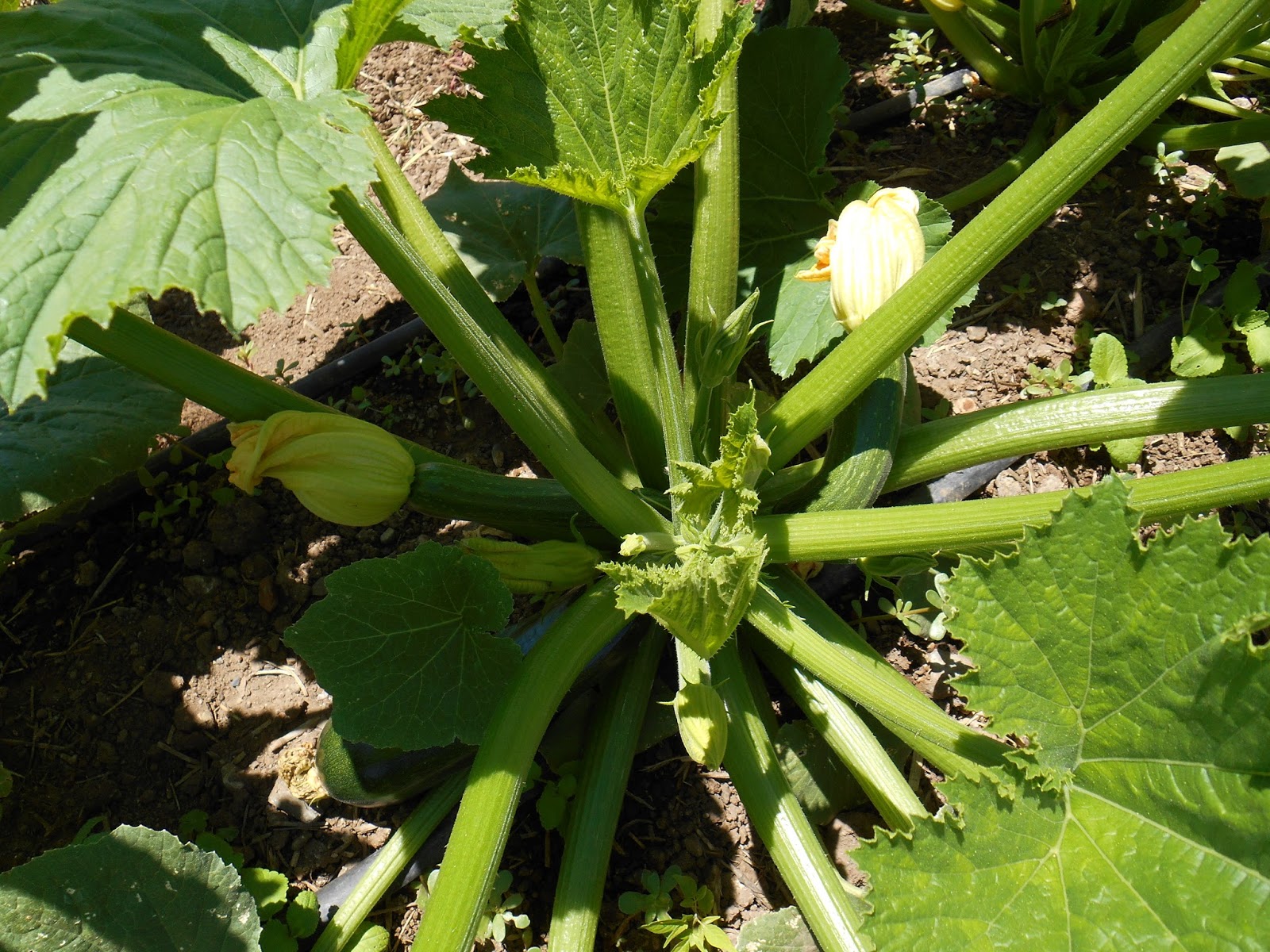
you can see the green zucchini blossoming from the yellow flower
first of our tomatoes at the farm
Even our fruits, which ripen into luscious yellows and purples 
start out as leafy green trees. 
apricots in the Orchard
But then there is "the green stuff," the greens and herbs that 
reach perfection at that stage in the plants' growth 
rather than ripening or maturing beyond the leaves. 

The chefs at the girl & the fig rely on our 
herb greens to transform their dishes into the memorable meals 
we hope will keep you talking about your experience at "the fig." 
Besides the arugula which is the basis of our signature "fig salad," 
there are other herbal greens we grow at the farm.
fig salad photo by Steven Krause for
Plats du Jour: the girl & the fig's Journey Through the Seasons in Wine Country
We love our chives: Chives have been cultivated in Europe 
since the Middle Ages, although their usage dates back 5000 years. 
They were sometimes referred to as "rush leeks." 
The Romans believed eating chives could increase blood pressure 
and act as a diuretic, as well as relieve the pain from sunburn or a sore throat. 

Although we know they have good properties, 
we mostly celebrate how good they make things taste!
chives at the farm behind "the fig"
and chives at Imagery farm
Chives are in the onion family. 
What we eat is not the bulb, though, but instead the "scapes." 
They have a milder onion flavor, with a hint of garlic, 
and make a delicious addition to salads and vegetable dishes, 
as well as a topping for fish and chicken.
They are very easy to grow, and when they bloom
chives make a lovely flower for the garden.
In fact, many gardeners grow them as much for the flower as they do for the herb.
(the bees like them too!)


Here's a great primer on chives and check out 

Other herbs at the farm include two other stalwarts 
needed by every chef: Italian parsley and basil 

Flat leaf or Italian Parsley growing at the farm
And did you know you can use the stems too? 
Since they are sharper in flavor and less delicate than the leaves, 
they really hold up in long cooked stews, stocks, braised dishes.

If you don't have your version of a backyard "farm," 
you can plant herbs in pots and on window sills. 
If you are short on space, herbs can easily be planted in containers. 
 Here's a basic how-to for herbs in a container:


And if you have a bit more room in your garden, container planting can be expanded 
but is still a great way to go for growing herbs.
What herbs are you growing and where?
Any tips on how to grow them or how you use them?

Wednesday

Our "go-to" garden

We are back and forth between the Imagery Farm, ESTATE 
and area behind the girl & the fig. 
Right now the winter plants at Imagery are flourishing, 
so we can put some effort into our "go-to" garden at the girl & the fig. 
As usual, herbs will dominate here, making it easy 
for the chefs to grab what they need. 
Our raised beds have always served us well and this season will be no exception. 
last season's herbs in one of the beds 
we are getting started with the herb beds  
Also continuing to thrive in the garden behind the fig 
are nettles, chard and rhubarb. 
In "What's growing" post a few weeks ago, we talked about 
how nettles are considered a "super food," because they are high 
in protein, iron, fiber, Vitamin A & C–making the effort to 
harvest them (3 pairs of latex gloves!) worth it. 
And how they taste in John's ravioli filling 
inspires us to keep them growing. 
Alongside the chard we are planting kale. 
This effort is a true family affair, with John, 
his wife Tina and mom Judy working the beds. 
Maybe this will be a new kind of kale –"Toulze kale!"
porchetta on a bed of polenta and kale
soon these beds will be lush with kale 
One of the signs of Spring is rhubarb and 
what we have growing at the fig is almost 
ready to taste–a tad too tart today 
in November this rhubarb was dormant in the bed at the fig
now the rhubarb is thriving 

almost ready 
waiting for the stalks to get red and ripe

but you can see the red stalks are getting ready
 to soon become our rhubarb tart.

photo of tart by Steven Krause from Plats du Jour book
John and Chef Ashley survey what's growing at "the fig,"
making plans for tending the garden 
and then what they will cook in the kitchen.

Working our gardens is hard but satisfying work.
It feels good to know where our food comes from 
and we take great pride in creating dishes for you, truly from "farm to table," 
something we have been doing for 15 years.
We appreciate that you come to our restaurants for this experience.
It is amazing to us how much we can grow in the garden 
behind the girl & the fig, only about half an acre.

A few posts ago, as part of our promotion of a fundraiser 
for "The Organic Life" documentary, we posted 
this insightful talk by Roger Doiron.
If you missed it, we are sharing it again.
It inspires us to keep growing–and hope it does for you too. 
 (TEDx talk, courtesy of YouTube) 

Friday

Is it winter or spring at the farm?

The weather is fickle and playing tricks on our Winter Garden. 
There have been days where it is almost 70 degrees and 
buds are out on some of the trees already. 
celestial fig tree
Nectarine tree

It is unlikely we will see fruit on the trees much sooner than usual,
but the blossoms peeking out are harbingers
of spring and spur us on in our work.
What was even more encouraging was that only six weeks
after planting garlic, we harvested four rows about a week ago,
bringing green garlic to the girl & the fig's kitchen. 

John created a green garlic pistou with striped bass,
artichokes, gigante beans and crispy artichokes
.
Green garlic ready for picking
garlic rows after recent harvest, ready for new bulbs below
Ray and Matt from Local Landscapers were back at it on the farm, 
planting more garlic so we will likely have 
one more harvest from this section of the farm 
before we put in other plants in this area for spring and summer.


Their careful work and the rich soil at our biodynamic farm 
ensure that what we grow is as pure as possible. 
Oyster shells which are pure calcium carbonate, 
are added as a soil amendment because they increase pH levels 
by adding lime and making the soil drain better.

It's as if we have one foot and one hand in our winter garden 

and the other preparing for spring/summer planting.

With the warm weather and our access to the greenhouse, 
we are now planting seeds in addition 
to what we are growing from transplants.  
The eggplants, peppers, herbs and tomato seeds 
will be started in the greenhouse, 
while most of the other vegetables are 
to be planted at the farm.  
We are gearing up to plant 300 tomato plants–just writing about them 
makes my mouth water, how about you?
And while we plan for summer's bounty from our seed packets, 
we continue to work the farm for what we will pick before spring.
In addition to the walla wallas and cipollinis
 we also are growing torpedo and red candy onions.
red candy onions

See the radish sprouts coming up between the red candy onions?
This is part of of our companion planting program
. 

Companion planting is based around the idea that certain plants 
can benefit others when planted close to one another.
We will talk more about companion planting in an upcoming post.

Alongside the 1200 onions John 
and his crew planted lancelot leeks
Can you tell the subtle difference between 
how the leek stalk looks–straighter with a sharp edge, 
than the torpedo onions which are rounder?
lancelot leeks
leek stalk
torpedo onions
You can certainly tell the difference when you are eating them. 
grilling onions in the girl & the fig kitchen
braised leeks w/creme fraiche & truffles photo by Steven Krause

Follow how the companion plants compliment each other.
Tell us what you have been successful planting together. 
By the time we share with you again, we may have harvested 
more from the farm. For sure, we will have planted more!