Showing posts with label biodynamic. Show all posts

Friday

A sense of place in our food

photo by Steven Krause
"I feel as if we are transporting the land to our guests," 
is one of the ways John describes why the farm project is so important to him. 
He muses on what a natural evolution it is to be growing so many of our ingredients: 
"The guiding philosophy for us has always been 
serving simple food that reflects a sense of place." 
This idea of "sense of place" is also referenced 
when talking about the concept of Terroir and in fact, 
that phrase is the loose translation for the word. 
Terroir comes from the French word terre "land" 
and was often incorporated into descriptions of wine, coffee or teaused to denote the special characteristics that the geography or climate characteristics 
of a certain place bestowed upon particular produce. 
The idea being that agricultural sites in the same region 
share similar soil, weather conditions, and farming techniques, 
which all contribute to the distinctive qualities of the crop. 
photo by Steven Krause
Certainly there is a particular Terroir at our farm on Imagery Estate Winery 
enhanced by the Biodynamic properties of the land there. 
In a recent blog post, Mike Benziger talks about the Terroir 
of the Biodynamic property they have created 
and which we are fortunate enough to share as part of our farm project. 

You know how amazing it is to eat tomatoes 
picked from the vine rather than 
ones purchased in a supermarket—understanding that 
where (and how) something is grown contributes even more 
to your taste experience, keeps us toiling at the farm and in our kitchens. 


 A recent article in The Atlantic about the mood-boosting properties 
of bacteria found in dirt (maybe that's why we like farming so much?) 

noted this as well: "Cooks have their own word for it. 
 Terroir is what makes a loaf of sourdough from San Francisco 
taste so different from its cousin in Bordeaux. 
 The regional microbes, in the soil and air, impart their particular notes to the bread. 
 You can taste terroir in your wine, your cheese, and even your chocolateall of which are produced with the help of specialized bacterias that can vary from town to town." 
So, indeed John is able to transport the land to our guests 
bringing our very own distinctive taste to the food we create for you.
photo by Steven Krausse
carrot soup photo by Steven Krause

At the Imagery farm, we are currently growing 
beets, radishes, carrots, potatoes along with the leeks, garlic and onions. 
see this small sprout of a beet from one of the beds at the farm?
soon it will be part of this luscious beet salad
and this row of Chinese Red meat radishes
will ultimately look like this. What will the chefs create?
These will likely have their own specific Terroir, 
different from what we are growing behind the girl & the fig or at ESTATE

John and Chef Ashley behind the fig
herb beds above and below lemon tree at ESTATE

Next time you are eating at one of our three restaurants—
the girl & the fig and ESTATE in Sonoma or the fig cafĂ© and winebar in Glen Ellen—
pay particular attention to the depth of the flavors of the food, 
knowing it is a reflection of the Terroir of where it was grown. 


Tuesday

January at the farm


It may be a new year but it is a continuation of our cycle at the farm.
We are in the midst of our winter garden with garlic as the first planting.
Needless to say, with our French and Italian cuisine, 
garlic is an important ingredient for all 3 of the restaurants.

Garlic was planted just a few weeks ago 
but with this unusually warm weather, the bulbs 
are already beginning to show "their feet".
The ground seems to think we are closer to Spring than the calendar does.
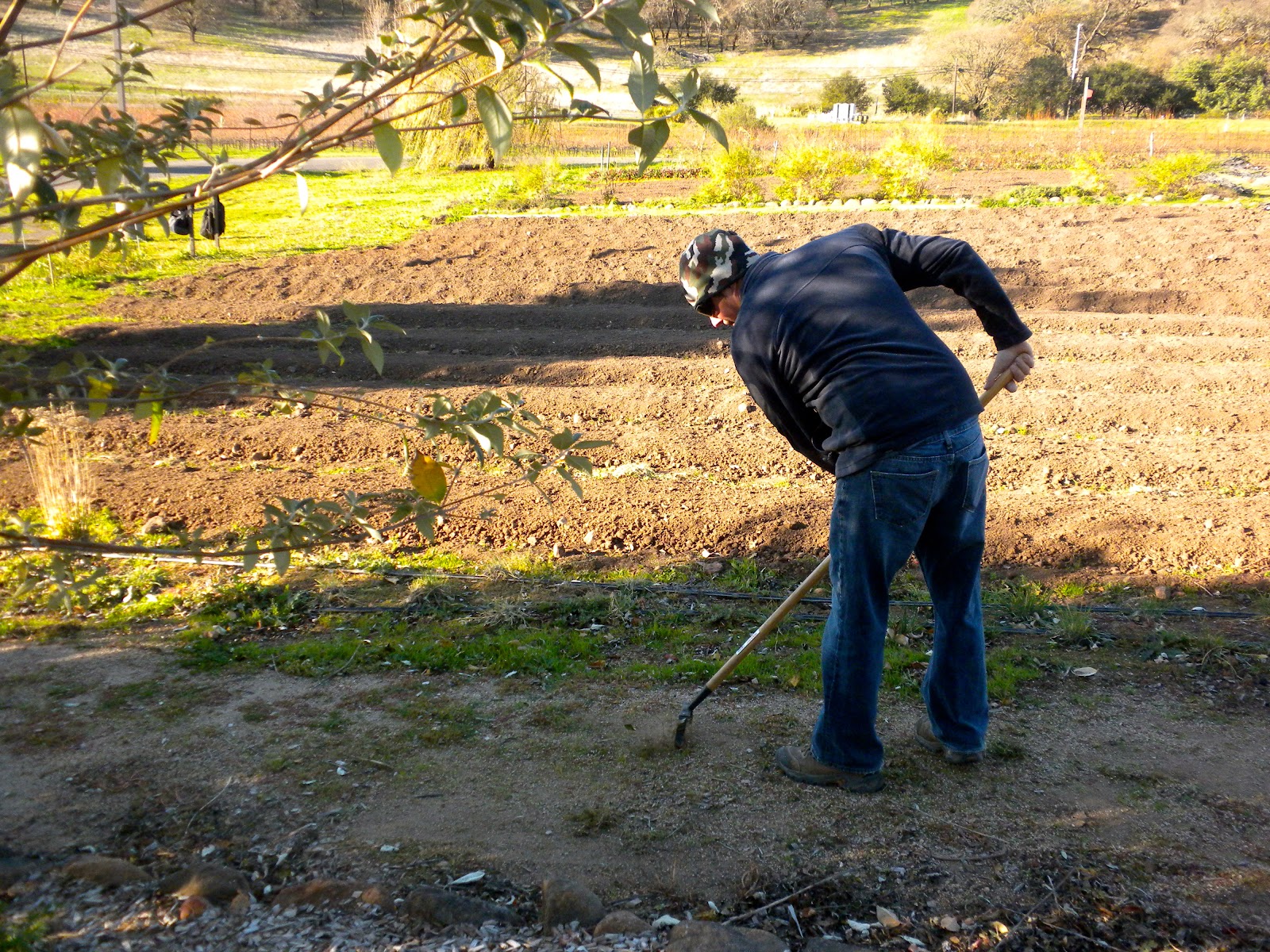
Part of our January labors involve working the 
raspberry and strawberry beds.
The raspberries were bountiful but some of the strawberries 
did not fare as well this summer, so we will transplant raspberries there.
But we are keeping one strawberry bed that was abundant. 
While Matt was consolidating the strawberry plants, 
he discovered frogs in the bed he was clearing.
This is actually a good sign since amphibians 
are the most fragile members of the ecosystem 
and not all that surprising in our biodynamic farm. 
We expect (and respect) the contributions 
of the "good" insects and animals that 
contribute to the health of the farm. 
The frogs are sensitive to UV light and need shelter 
in a semi-moist place but they don't harm the fruit. 
Their job is to eat the "bad guys"—insects like slugs 
that do harm the strawberries. 
And even now in January, the strawberries are looking healthy. 
Did you know that only the white blossoms produce the tasty fruit?
If you see a yellow blossom, that's a 
"false strawberry"—it may be edible but does not have much flavor.

Still a few months to go before we are back picking 
raspberries this Fall after bountiful summer crop

We are now working with the raspberries in their bare root state.
It often takes years for raspberries to be established 
enough to divide and transplant this way, so once again we are very lucky


These bare roots will soon bring us luscious berries.

This Western Blue Bird is supervising our work 
with the raspberry bare roots.
We value his contribution and know that he may be back to steal a taste
but we are willing to share.


Thanks so much for reading this blog and 
following our endeavors at the farm.
We hope to see you at the restaurants and 
have you share the fruits or our labors here.
And please do post a comment if you are enjoying these chronicles, 
have a story of your own gardening to share or ask us a question.

Wednesday

the farm project - a biodynamic organism

We are approaching the end of December which also marks the end of the year. 
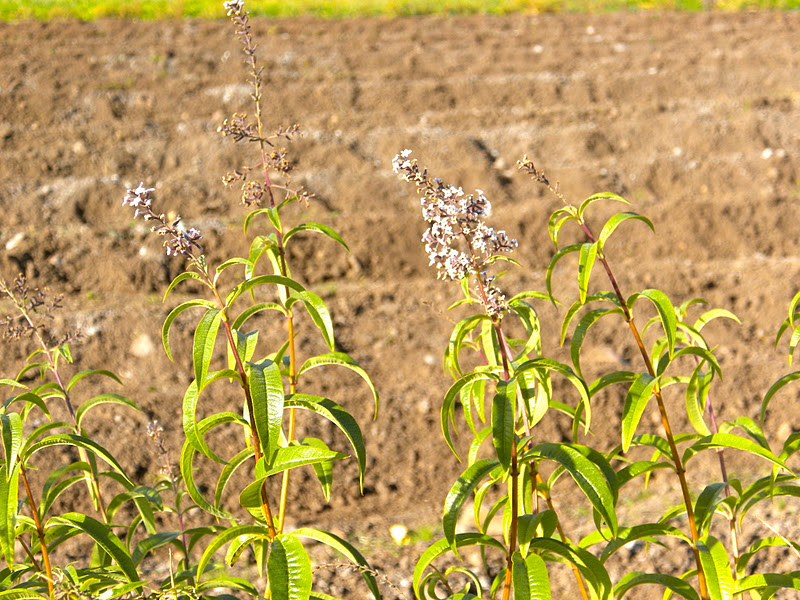
But this "end time" is also a beginning for us—starting our Winter Garden.
In the third year of our farm project this is the first time 
we have planted a Winter Garden, so this has not been an idle month for us.  
As you've seen, we cleared the summer beds and 
followed the garden as it made its natural transition from Fall to Winter.

at peak of summer
last of the squash this Fall heralding the end of harvest
frosty mornings mean winter is here
The soil in the lower quadrant beds needed to be amended 
with nitrogen and oyster shell lime for calcium and pH adjustment. 
The lime bolsters the soil's water solubility. 
John working the beds before amending soil 
John (center) confers with Matt and Ray from Local Landscapers


Oystershell lime promotes healthy root growth,and improves soil compaction. 
This is all part of our commitment to farming a Demeter certified biodynamic farm.  
Biodynamic agriculture is a method of organic farming that 
emphasizes the holistic development and interrelationships of the 
soil, plants and animals as a self-sustaining system.  
This is the highest level of organic farming and your approach to farming this way 
goes further than just refraining from the use of pesticides.


"Biodynamic farming is a type of organic farming that 
incorporates an understanding of 'dynamic' forces in nature 
not yet fully understood by science. 
By working creatively with these subtle energies, 
farmers are able to significantly enhance 
the health of their farms and the quality and flavor of food."
 
Chef Uriel from ESTATE works the farm 
This is an especially good fit for our farm project and resonates with us
as we all work together to grow the food we will offer at the restaurants.


To have a successful biodyanmic garden 
 a great deal of care and individual hard work 
is required to maintain that delicate balance. 
John, the restaurant Chefs, Matt and Ray from Local Landscapers 
and Jaimie and Rafael spent 
much of December working the land by hand.  


Our farm is part of Imagery Estate Winery's commitment 
to having their land Demeter certified.
This organization is the world's only certifier of biodynamic agriculture practices, 
so we take seriously what we need to do for our part in the process.


Did you know that Demeter is the god of grains and fertility?
I like to think that he is working right alongside us as things grow.


I know that the birds and animals that co-exist 
with our plantings at the farm do their part.


And this majestic egret visits often to check on our progress.
Like you, he is following along as we plan and plant at the farm.


So we begin a new year with a new garden project 
and look ahead to what it will yield.


For us, at the fig farm project, 
winter is not a dormant time at all.


We want to hear your comments and questions here 
and look forward to sharing the fruits of our labors 
from the farm with you at our restaurants.