Showing posts with label winter garden. Show all posts

Sunday

Hibernating season at the farm


Winter has been called the "hibernating season" for gardening. 
We've mused on how much a metaphor for patience 
the garden is about this time of year. 
With the recent cold weather, we are reminded of this even more. 

Many of our plans are slowed as we pay attention 
to the weather–we can't plant with the ground as cold as it has been 
and spreading the compost we are developing 
must wait until we are certain it won't be washed away by rains.
our compost pile "marinating" - we will add our worm tea
to further enrich it
We put the effort into making our compost so that 
we do not need to use commercial fertilizer.
 "Using compost improves soil structure, texture, and 
aeration and increases the soil’s water-holding capacity. 
Compost is one of nature’s best mulches and soil amendments. 
Best of all, compost is cheap. You can make it without spending a cent." 
This is especially true for us since we can use all our kitchen scraps
And having the compost pile right outside the kitchen door makes this very easy. 
kitchen food scraps behind the fig
some of the plants at the farm
become our compost pile there
our compost bin right outside the kitchen door
So we continue to nurture the farm project in both locations, 
We follow "the garden's plan," keeping our focus on 
the soil to ensure a fertile environment this coming Spring and Summer. 
"To maintain the soil in the best condition for spring planting, 
cover the surface with several inches of straw or leaves 
to keep it from freezing and to maintain moisture. 
If the soil is fertile, this covering will even allow earthworms to 
be active in the soil during the winter months.
When the mulch is raked away in the spring, the rows can 
be laid off and you are ready to plant with a minimum of effort."
Chef Jeremy surveys the beds with Matt & Ray
from Local Landscapers


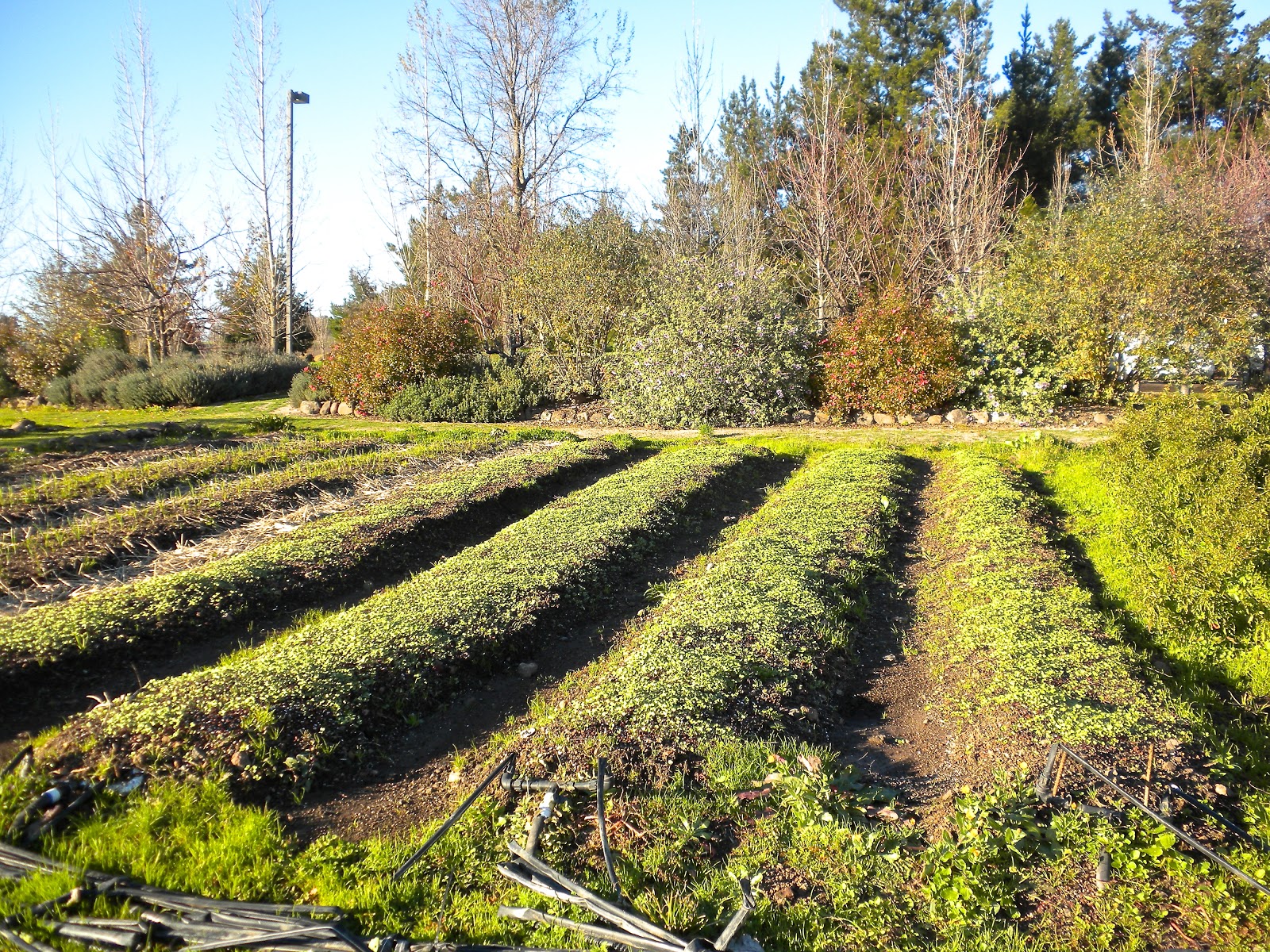
beds at the farm
As we labor during this slower time, we appreciate the fruits 
we are able to harvest from the farm, while we dream 
of the more abundant time to come in a few months. 
cauliflower plants
And we are encouraged by the signs of growth we see at the farm, 
even as simple as the wildflowers that pop up in the sparse orchard.


A particular favorite Winter dish at the girl & the fig 
is our Cauliflower & Romanesco Gratin. You can find the recipe in
Since this is such a perfect recipe for this "hibernating" time of year, 
we will share it with you here: This serves 6:
1 large head cauliflower, cut into 1-inch florets
1 large head Romanesco, cut into 1-inch florets 
(this is a variety of green cauliflower; broccoli can be substituted)
1/4 cup extra virgin olive oil
sal & pepper to taste
1 1/2 cups heavy cream
1/2 cup whole milk
6 Tablespoons grated Parmigiano-Reggiano cheese
pinch of nutmeat
1 cup Herbed Bread Crumbs 
1 Tablespoon chopped fresh flat-leaf parsley 

Preheat the oven to 450°F.
To prepare the cauliflower: Reserve 1⁄2 cup of the white florets and the white stems and set aside.
Toss the remaining cauliflower and Romanesco with the olive oil and season with salt and pepper to taste.
Roast the mixture on a baking sheet for 12 to 15 minutes or until the cauliflower has browned on the edges. Remove from the oven and set aside.
To prepare the cream: Heat the cream, milk, cheese, nutmeg, and the reserved cauliflower in a large saucepan over medium heat. Season with salt and pepper to taste and simmer over low heat until the cauliflower is tender, about 15 to 20 minutes. Place the mixture in a food processor or blender, purée until smooth, and adjust the seasoning as needed.
To finish: Mix the bread crumbs and parsley together. In a large bowl combine the sauce and the roasted cauliflower and stir until well-coated. Transfer the mixture to a casserole pan or six small ramekins. Distribute the bread crumbs equally over the top(s) and bake until golden brown, about 7 to 9 minutes. Serve hot. The gratin can be made 1 day ahead. Reheat  in a 350°F oven for about 12 to 15 minutes or until heated through.
Cauliflower Romanesco Gratin photo by Stephen Krause from
Plats du Jour: the girl & the fig's Journey Through the Seasons in Wine Country
Do you have any favorite vegetable recipes that you create,
either from your garden or what you find at the farmers market this time of year?
Remember, even though the choices may seem slim
compared to summer time, those farmers' gardens are hibernating, 
working and preparing for more bountiful times.

Friday

The Garden's Plan


definition of "grow" (from the dictionary)

[groh]  verb, grew, grown, grow·ing.
verb (used without object)
1. to increase by natural development, as any living organism or part by assimilation of nutriment; increase in size or substance.
2. to form and increase in size by a process of inorganic accretion, as by crystallization.
3. to arise or issue as a natural development from an original happening, circumstance, or source: Our friendship grew from common interests.
4.to increase gradually in size, amount, etc.; become greater or larger; expand: His influence has grown.
5.to become gradually attached or united by or as if by growth: The branches of the trees grew together, forming a natural arch.

The farm is all about growing—obviously the vegetables we plant, 
but also about our own growth. Others have written about how
 "gardening can be considered a metaphor for life." 
And the more time and effort we spend farming, the more we understand this. 
Executive Chef John Toulze has talked before about how "farming teaches us how to cook," as we pay attention to the seasons of the farm which may or may not 
fit the season as we expect. The ongoing work at the farm teaches us patience in broader ways as well—applied as we work the land, plant the seeds 
and tend our plants as they grow according to their own plan. 

John planting seeds for cover crops
some growing better than others
Then like most important lessons in life, the patience we bring 
to this project somehow becomes a greater part of our lives. 
"The thing about gardening is that you realize you can’t rush things. 
A seed takes a certain amount of time to sprout, no matter what you do."
the collard plants seem to be thriving

broccoli starting to grow

"A plant or tree takes a certain amount of time to grow, flower, 
or bear fruit, no matter what you do—some things grow as we intend, others do not." 
This may seem like a simple concept, but it is often challenging 
to apply to other areas of our lives. 
Which is why gardening is a good reminder to us in how to live. 
Because the garden has its own planand the plants, with perhaps 
a bit of help from us, and a lot of nurturing from nature will grow as they will.
Some plants are flourishing at the farm and some are not doing as well.
the lower beds when they were just planted
most of the plants are beginning thriving
but we are not sure about the beets yet
This is especially true at this time of year. 
We worked hard to get the winter crops planted before the rains 
especially the cover crops necessary to nourish the soil 
throughout the winter in preparation for spring planting. 
the clover beds will do well this winter
and most of the vegetables in the lower beds
should soon be on the menu at the girl & the fig
radishes are always growing at the farm
photo by Steven Krause
 
to keep up with demand for our heirloom radish starter,
perennial favorite on the menu at "the fig."
Chinese snow peas 
and our lush kale always thrives at the farm

on the menu now at the girl & the fig:
braised short rib, yukon gold potato croquettes, braised kale, natural jus

Do you find gardening meditative? 
Does your time in the garden help you clear your head or find creative solutions? 
Or, does it just help you relax as you muse on what to cook with what you grow?


Wednesday

the farm project - a biodynamic organism

We are approaching the end of December which also marks the end of the year. 
But this "end time" is also a beginning for us—starting our Winter Garden.
In the third year of our farm project this is the first time 
we have planted a Winter Garden, so this has not been an idle month for us.  
As you've seen, we cleared the summer beds and 
followed the garden as it made its natural transition from Fall to Winter.

at peak of summer
last of the squash this Fall heralding the end of harvest
frosty mornings mean winter is here
The soil in the lower quadrant beds needed to be amended 
with nitrogen and oyster shell lime for calcium and pH adjustment. 
The lime bolsters the soil's water solubility. 
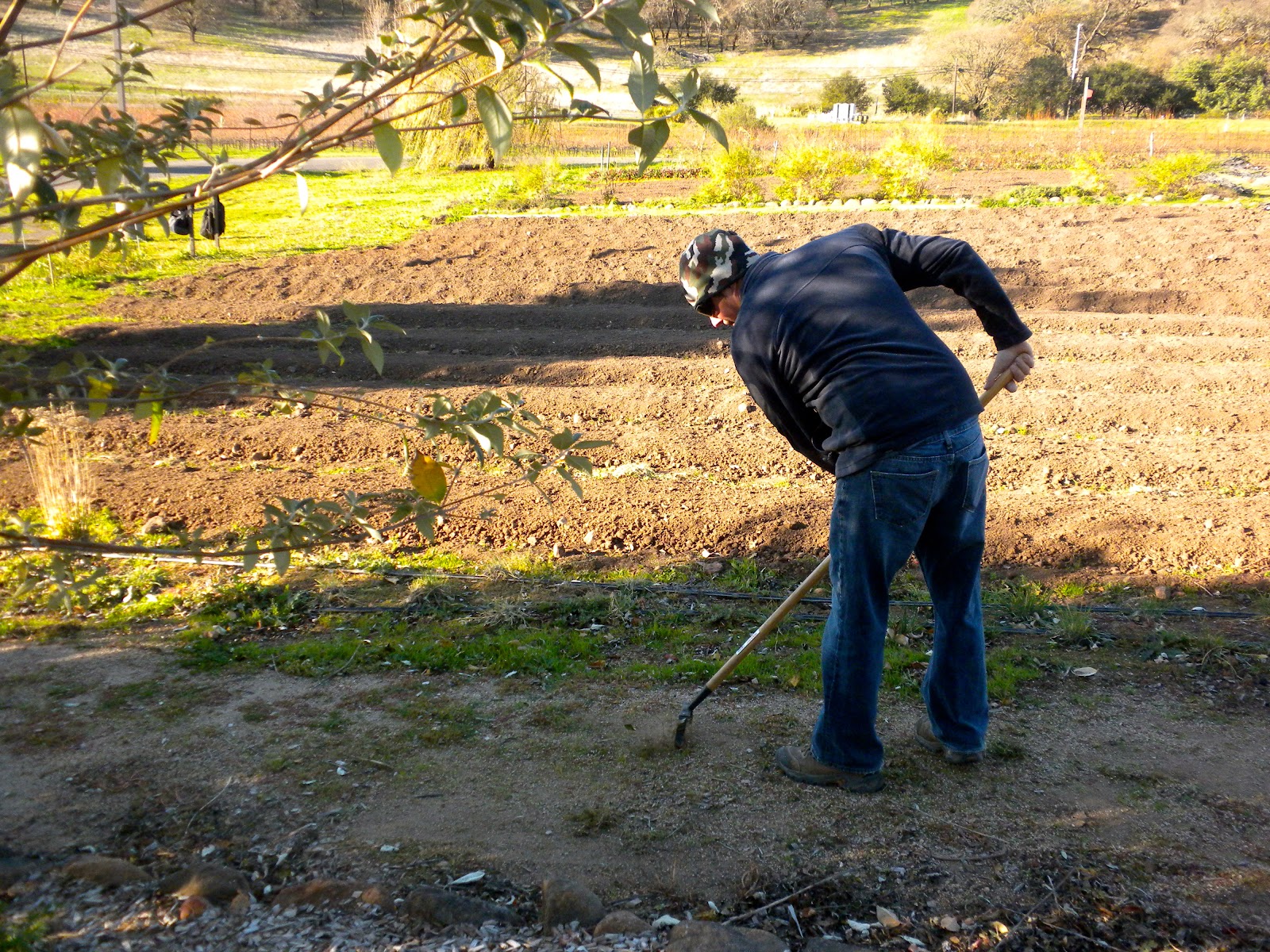
John working the beds before amending soil 
John (center) confers with Matt and Ray from Local Landscapers


Oystershell lime promotes healthy root growth,and improves soil compaction. 
This is all part of our commitment to farming a Demeter certified biodynamic farm.  
Biodynamic agriculture is a method of organic farming that 
emphasizes the holistic development and interrelationships of the 
soil, plants and animals as a self-sustaining system.  
This is the highest level of organic farming and your approach to farming this way 
goes further than just refraining from the use of pesticides.


"Biodynamic farming is a type of organic farming that 
incorporates an understanding of 'dynamic' forces in nature 
not yet fully understood by science. 
By working creatively with these subtle energies, 
farmers are able to significantly enhance 
the health of their farms and the quality and flavor of food."
 
Chef Uriel from ESTATE works the farm 
This is an especially good fit for our farm project and resonates with us
as we all work together to grow the food we will offer at the restaurants.


To have a successful biodyanmic garden 
 a great deal of care and individual hard work 
is required to maintain that delicate balance. 
John, the restaurant Chefs, Matt and Ray from Local Landscapers 
and Jaimie and Rafael spent 
much of December working the land by hand.  


Our farm is part of Imagery Estate Winery's commitment 
to having their land Demeter certified.
This organization is the world's only certifier of biodynamic agriculture practices, 
so we take seriously what we need to do for our part in the process.


Did you know that Demeter is the god of grains and fertility?
I like to think that he is working right alongside us as things grow.


I know that the birds and animals that co-exist 
with our plantings at the farm do their part.


And this majestic egret visits often to check on our progress.
Like you, he is following along as we plan and plant at the farm.


So we begin a new year with a new garden project 
and look ahead to what it will yield.


For us, at the fig farm project, 
winter is not a dormant time at all.


We want to hear your comments and questions here 
and look forward to sharing the fruits of our labors 
from the farm with you at our restaurants.